Thursday 10 May 2012
THIS BLOG IS CLOSED
For recent writing please visit my new blog, Telling From Birds Toll.
Or, for a fuller account of past work, julianowen.net.
Thanks!


Thursday 21 July 2011
The Mother
 Joan took her grandmother’s silken handkerchief, gave it two quick dabs on her tongue, and pressed it to his cheek. She chastised herself in noting the fact that, for the first time in as long as she could remember, he didn’t flinch. His mind was elsewhere. And, in any case, as if such a thing should matter on a day like this! It was a day for the passing on of heirlooms and so, with two swift movements of thumb and forefinger, she folded it quarter size and slipped it into the breast pocket of his suit. His suit! Goodness, when had Michael last worn a suit? She wished his father was here to see him, was here to share the throng of family and friends today, lustily sing alongside her, and break the quiet tonight. It was a day for singing and sharing. Instinctively she turned towards the photograph on the mantelpiece. Oh, George, she sighed.
In a quarter of an hour they’d be due at the church. It would be filling up by now, friends and family gathering in awkward groups, the men to exchange thoughts on reliable A-roads and, with conspiratorial twinkles of pride and slightly louder voices, unmarked shortcuts. She was happy to be missing this part of the ritual, never quite being sure whether the point was to take delight in arriving quickly or to play up the travails of unannounced traffic lights and inscrutable one-way systems; whether the triumph lay in avoiding any sign of battle or ploughing straight through one.
The car would be here presently. It was just she and him in the front room, just a mile to the church and his new life. And it was a new life. She’d seen other mothers crumple, mothers who’d thought their sons would always be theirs, she’d seen them bend, never stand fully upright again. Well, not her. She’d be straight-backed in the butcher’s, proudly tall in the chemist’s, and tell the world with a smile just how pleased she was for him. She’d miss seeing him, of course she would, but there was no use in moping under the misapprehension that he wouldn’t be happier in his new home. You don’t want to be worrying about me, Michael, she said. I know we’ll meet again soon enough.
Where was the car? Michael’s best man had arranged that it would be with them by now. Mustn’t worry, she thought. Sean had always been a grand friend, dependable as they come, and he wasn’t going to let anyone down on an occasion like this. Even as she thought back to the time Michael had first brought him round to the house, and Sean had mapped out a square metre in the back garden and offered her son first use of the magnifying glass and insect book, she heard two cars draw to a halt. Sean and the others made their way up the garden path. Here we go then, Michael, she said with a deep breath. The doorbell rang. They came inside and, after brief conversation, Joan, Michael, Sean and the rest trooped down to the road. Mother and son travelled in the first car, best man and company followed behind.
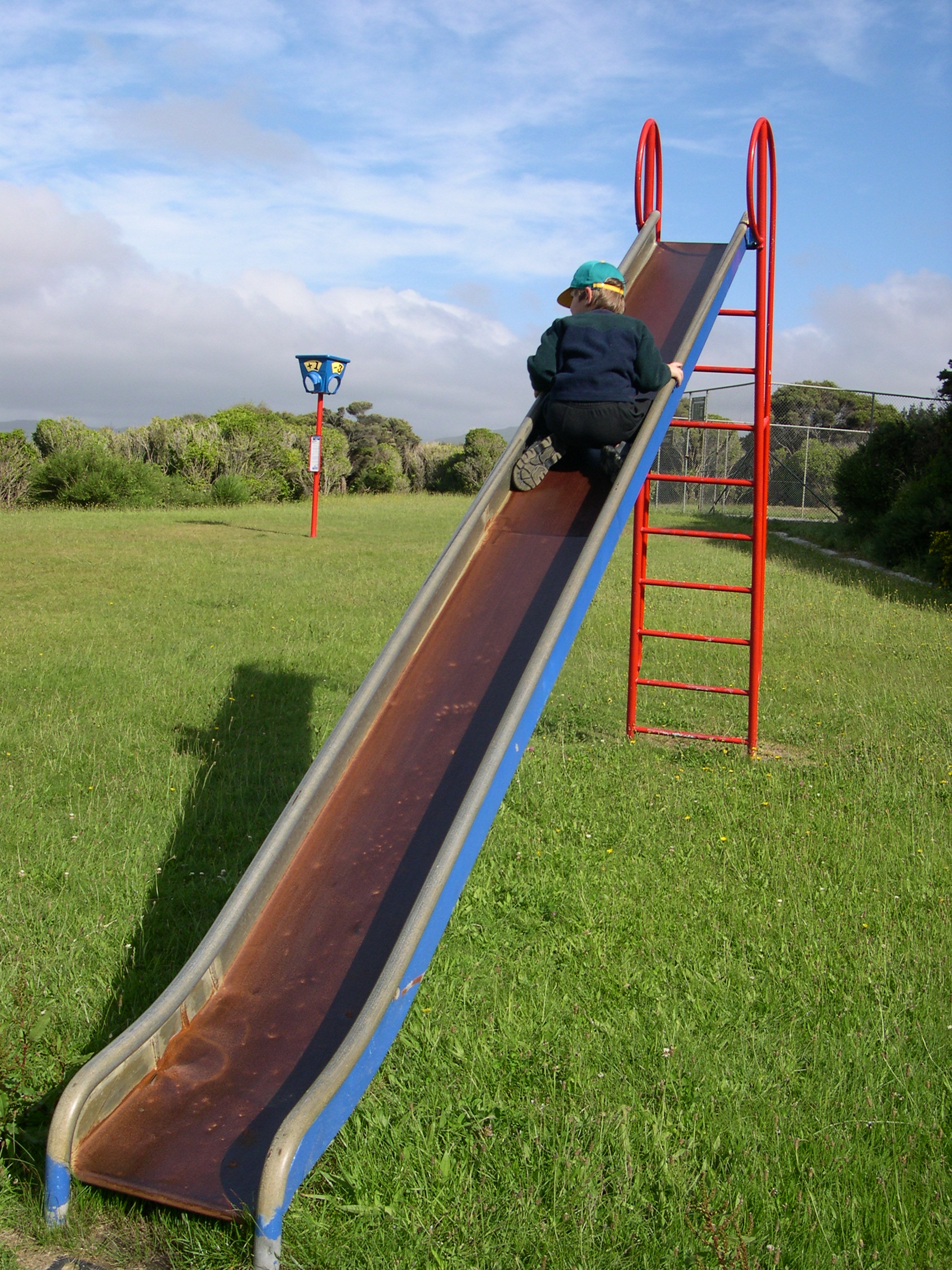
As the car drove past the playing fields, a young boy slid down the slide. Joan smiled a sunny smile and then her face clouded. She had tried never to pay too much mind to Michael’s betrothed, and she wasn’t going to start today. No, not even today George, she murmured pre-emptively. Take everyone as you find them, he would say. That’s the trouble, George, she thought. I do. Oh, she could see the attraction all right, and in a curious way Michael’s weakness only served to confirm in her eyes his becoming a man, but you could bet the family silver she’d be off to snare her next catch even before the echo of the church bells faded. What a picture she’d be today, she thought, reproving tsk on the tip of her tongue. There she’d stand, down the front, dress chosen for maximum attention, with a slice of onion beneath her glove should she need help in provoking the requisite moist eyes for the benefit of the gallery. She would, George, she insisted. You know she would. And all the while she’d be looking around the congregation plotting her next move.
Would any of his old girlfriends be there? Never easy to see an old love move on like this. Poor Sarah the teenage sweetheart, she’d be there of course, despite herself as always. So many years together, the script for their inevitable marriage had been inwardly rehearsed by everyone except Michael. Or, rather, he had rehearsed it, but then suddenly found it dull and uninspiring and left it torn in two. Yes, Sarah would need a little support today. No doubt that new young man at the library would cast himself in the role of selfless hero. She could see him now, protectively clasping his colleague’s heaving shoulder, then pressing her streaming face into the sanctuary of his chest, gently stroking the back of her head, all the while sweeping his eyes across the assembled masses to ensure they could admire his expression of pained nobility. Oh, she knew his sort all right, the sort drawn to grief like a shark to blood. How could he let pass an opportunity like this? He’d string her along just sufficiently to see her hair unpinned, tell her it fell across the sheet with the golden arc of a sunset, then later cry that he knew he couldn’t hope to compete with the memory of the man who’d moved on. There had only been Michael, he’d say, would only ever be Michael, and she’d know he was right and blame herself and absolve him and leave him free to pick up a fresh scent with a clear conscience. Poor Sarah. How many times had she pictured Michael standing at the top of an aisle dressed as smartly as he was today, pictured him smiling broadly for her benefit, her assurance, as she processed with shy smile and proud father towards him? And who was to say, even after today’s ceremony left her fairytale impossible, even after she’d seen him alone at the top of an aisle waiting for a vicar to announce him locked in eternal embrace with someone else, she wouldn’t still picture it tomorrow?
Back at the house, Joan had pictured crowds lining the streets for the whole of the route, well wishers turning out to acknowledge today’s return of one of their own before he set off again for pastures new. But, she reflected as the car turned into the avenue of yews, there had only been the child in the playing fields. And now, to her alarm, everyone was standing outside the church. She’d imagined they’d all be inside this close to the service, had forgotten they'd probably want to let Michael in first. She eyed them with trepidation. So many little glances to acknowledge, so many guardians of propriety to please, when, she suddenly realised, all she wanted to do was sit in the car and hold her boy. Or scream. Scream and scream until George raised himself from his endless sleep in the adjacent churchyard and took her home. But she didn’t scream. Instead, she lightly pressed the brim of her hat between her palms and patted the back of her hair and said they’re all waiting for you, Michael. Everyone had turned to look as the car’s heavy engine announced their arrival and then everyone had immediately looked away. It was as though they thought that if they turned swiftly enough, then the car might not have been there at all. It drew to a halt. Right then, Michael, this is it. Time you were off, she whispered quietly to her son. She said it a little sternly, offhandedly, as though she were doing no more than encourage a reluctant young boy to head through the door to the playgroup, or step through the rear doors of the minibus to join the nervously eager faces tightly clutching newly bought rucksacks and singing ‘Campfire’s Burning’, or assure a pale-faced teenager that he’d done all the revision he could and just take a deep breath before you start and all will be well, or a few months later thrust into his hand a carrier bag full of teabags and Marmite and dried pasta and tell him he’d be welcome home any time but best give it a full couple of months first, best give himself a chance to settle and then he’d quickly realise he was surrounded by the most likeminded, most exciting people he’d ever met and most likely he wouldn’t ever want to come home again! and he’d smile the nervy smile which was meant to assure her but which she knew was no more sincere than if the boy walking into playgroup had been grown up enough to disguise his thoughts and turn and grin. But there was no nervous smile today. The heavy engine, which had been ticking over in virtual silence, stopped. A man opened the boot and other men gathered round. The boot indeed! What do you call the back door in one of these things, Michael? she asked, but he was already leaving. Even as she watched, even as he was still within arm’s reach and she could, if she wanted, cling on and hold him close and never, ever let him go, he slid with remorseless ease out through the door and, with a momentary muffled knock, onto the shoulders of the four men.
Wednesday 16 February 2011
The Aisle

The first chord of the Wedding March struck up and he turned to look down the aisle. His heart leapt. This was it, then. She was going to be his. All his. Just as on the day they first met, her beauty floored him. Just as it now floored the congregation, in collective gasp, though he knew for certain only he and he alone understood the extent to which this was not the product of some glorious happenstance meeting in the parental gene pool, but the physical amplification of an angelic heart. She began to step toward him. As her hip swayed and her breast heaved deep, the crowd, her dress, the cross, all disappeared, and he saw her stepping in fear and expectation toward his bed on that first night. He sighed. All these years later, after all those concentrated hours and days of wonder, he was still incapable of fathoming how their path had led from that night to this moment. He supposed he never would. She was close now. Close enough for her father to catch his eye. No one would ever be worthy of his daughter, naturally, but he’d never been left in doubt there were plenty worthier than him. Today, though, was different, and he looked upon him with a gleaming countenance. As father and daughter drew level she smiled, shyly. A shared moment, never to be forgotten. And then, without breaking step, she walked on by. She was going to be his. All his.
Saturday 29 January 2011
The Salesman's Guarantee

The salesman had been right when he said “Sir, this stool will last you a lifetime.” Utterly dependable, three legs as solid as the day he and Margaret had bought it to serve as Christmas seating all those years ago. Back in the days when the in-laws crowded out the dining room, leaving Thomas relegated to the fold-up table normally reserved for camping. He wondered how many times he’d stood on it to put the living room clock forwards, backwards, forwards, backwards. Even as the house had grown quieter over the years, today to the point of silence, and even as his frame had begun to fill with indulgent consolation in middle age, it would bear his weight without a murmur. Almost uniquely amongst the contents of the house, Margaret had raised no objection when he’d said he’d like to keep it, acceded that Thomas was too big for it now anyhow. It was a small mercy, and he was grateful, though it would have meant more if she’d been aware of bestowing it. As he stood and reflected, he realised with a dead shudder that he’d been sitting on it, three years later, in that early morning hour, when he first learned the news about Thomas. Yes, the stool had become a fixed certainty in an uncertain world. And now it rolled end over end, not a creak to be heard, before slowly rocking gently back and forth in apparent unity with the already limp body swinging above.
Friday 5 June 2009
MUSIC: Ralph Stanley Live Review

Bath Festival: Ralph Stanley
Bath Pavilion (Fri 29 May)
Left to right stand four generally well-filled blue shirts, charcoal grey ties and trousers. Respectively they clothe men clutching fiddle, banjo, guitar and double-bass (or “bass fiddle”). The instruments sing and their voices are of the angels. Soon, a man clad all in black will stand among them. Ralph Stanley has been performing since 1946, and now stands held by a solitary spotlight singing ‘O Death’ acapella. Words fail us (save to say that we’d guess 50% of you, recalling the ‘O Brother…’ soundtrack, are now thinking ‘Oh, him…’). It’s an elemental voice, a wind-blown mix of sand and wood and salt. It sounds a millennia or two older than its 82 years, the witness to every last event that’s happened since. Put simply, it’s the definitive mountain voice. Like Aretha with soul, or Muddy Waters with electric blues, Ralph Stanley came in on the ground floor of his chosen musical form and unwittingly cast its sound in his own image. Every subsequent bluegrass vocalist stands inevitably, respectfully in his shadow. Besides setting them, tonight he also rolls the standards out: ‘Pretty Polly’, ‘Little Maggie’, ‘I Am A Man Of Constant Sorrow’. When he leads a four-part acapella harmony for ‘Amazing Grace’, time stands still.
Thursday 4 June 2009
MUSIC: Booker T Jones Profile

Wow. I said stuff, he listened and then he, like, said stuff back. I mean… wow. You’d be right in assuming that, for someone who took their first tentative steps in the art of conversation sometime around 1974, the novelty might have worn off by now. For that matter, you may also think that the successful completion of a 25-minute phone call shouldn’t really necessitate a celebratory jumping up and down on the spot. Such, I discover, is the unselfconscious response to crossing off the name that, ever since the death of Johnny Cash, has reigned supreme at the top of my Would Love To Talk To list.
Booker T. Jones. Born in Memphis on 12 Nov 1944. One of the key figures who took all they’d learned from the gospel they played in church and applied it to a new, secular, heart-baring musical form: soul. The organ playing head of The MGs, house band for the Stax label, and therefore one of the most influential acts in the history of popular music. Supplier of the bare bones upon which the likes of Otis Redding, Sam & Dave, the Staple Singers, Wilson Pickett and Albert King sung with largely unchartered abandon about matters of the flesh. A scholarly man who’d split his time between Stax and Indiana University, where he studied classical music composition. Who wrote songs like ‘I Love You More Than Words Can Say’ and ‘Born Under a Bad Sign.’ And who is on the other end of the line.
Regular “How are you?” opening pleasantries reveal that, later today, Jones will be flying down from his home north of San Francisco to play the Coachella festival in Indio, California. Unusually, the question is reciprocated. “You’re in England?” Bristol, yeah. “Oh, ok, cool. Bristol, wooah, I haven’t been there in a while. Nice town.” He sounds sincere. After all, he played the Colston Hall with Otis Redding in 1967, part of the UK tour when the impact their songs were making first began to sink in. “We were Southern boys, we didn’t know the music had been outside of our territory. To see people who’d been listening to us on pirate radio sitting in the front row, singing all the words, was such a compliment. I remember the whole town, the show, the theatre. It was a nice brisk day.”
I’m desperate to talk more about Stax but, after all this time, another five minutes won’t hurt. Instead, I’ll make polite inquiries about ‘Potato Hole.’ Must be nice to be releasing your first album in close on two decades? “It’s been a long time, yeah.” Why now? There follows a chastening lesson of an answer: never be so presumptuous as to second-guess where the most personal revelations of an interview will stem from. “Music has been churning inside me my whole life. I’ve always had the inspiration to put an album out, but haven’t always had the opportunity. For many years I was languishing with the music caught up inside me and not actually coming out. Now that’s over and I’ve got a release – in both ways.”
Those seem like extraordinary circumstances for a man with your musical history. Were you unable to get a deal? “Yeah. And I’ve also been pretty stubborn and singular in my musical quest. I didn’t really conform in the late 60s when I was at Stax, and that cost me. I had a love of jazz, country music, rock, but it was just out of place there. Which is fine,” he says in concessionary tone. “But I walked out...”
Did it feel that Stax were treating you more as an employee than a musician in your own right? “That’s exactly right. I absolutely was an employee, and they had every right to say ‘We’re doing very well and we want to continue with that.’ But, you know, I wasn’t the only one: Otis Redding was a big Rolling Stones fan, Eddie Floyd liked rock.”
‘Potato Hole’ was the result of jamming with Drive-By Truckers, the results “kind of lending themselves to a big funky southern rock ‘n’ roll band.” Neil Young also features. There are covers of Outkast and Tom Waits. It confirms an appetite for listening to new music that hasn’t diminished since playing on Stax’s first hit, Rufus and Carla Thomas’ ‘Cause I Love You.’ When that charted, did you think ‘I really might be onto something here’?
“No. I was in the eleventh grade. What I was onto was the best after-school job anyone could possibly imagine! A staff player making something like $15 a day. I was the highest paid kid in town. I borrowed the baritone sax from the school band room, my friend David Porter came to get me out of class, and borrowed a car to take me over to Stax, so [chuckles heartily] it was all just thrown together. I had no idea it would go any further than Memphis, our local neighbourhood.”
What was the music you drew on when you switched to the organ? “I had taken piano lessons, studied Bach and Handel, and took formal organ lessons from my teacher, Mrs Cole. But at home I listened to Roy Hamilton, blues records on the radio and around town, Hank Williams, a lot of gospel music, playing hymns for the men’s bible class on Sunday mornings. I’d sneak into the church with my dad’s key and play the big pipe organ.”
Last year, one of Jones’ charges, Mavis Staples, told me a little about Southern life in the 60s. “A black family moves into a neighbourhood and the next morning when they get up and go outside, there’s graffiti sprayed on their garage: ‘N-word go home’. Their car is all painted up, some have Klan crosses in the yard.” I put it to Jones that this can’t have been an easy time or place for a multiracial act like The MGs.
“Y’know, Julian, you’re mistaken for this reason: they couldn’t see us. There were no photos of us out at that time. I think black people thought the band was all black, and white people thought it was all white. We didn’t have any difficulty getting on the airwaves. It wasn’t until we played live, and that wasn’t so difficult at first because we either went to a white club or a black club. We kind of side-stepped all the pitfalls, except the restaurants and the hotels. There were times when Al [Jackson, drums] and I would go in to get the food to bring out to Steve [Cropper, guitar] and Duck [Donald ‘Duck’ Dunn, bass], and vice versa. The worst that could happen was you got tossed in jail. But that never happened...”
I tell Jones about one of my favourite records: an outtake from the ‘(Sittin' On) The Dock of the Bay’ sessions, Redding cawing like a seagull, fluffing the outro and the desk responding “You’re not ever gonna make it as a whistler!”
“I have never heard that!” he replies. “You’ll have to tell me where you got it.” I’ll send you a copy. “That’d be great.” I bring it up because, with everyone dissolving into laughter, it sounds such a pleasure. “Yeah… yeah, it was special.” To this point, Jones’ tone has been light and relaxed. Now there’s a weight. Any time I’ve seen the MGs or other Stax hands interviewed, when talk turns to Redding - four decades on from his death in a plane crash at the age of 26, just a fortnight after the ‘Bay’ sessions - it’s always accompanied by a faraway look and a sigh. This isn’t a line of inquiry to pursue much further. Was it like that from the moment he first sung with you? “Every time I was ever close to him it was special, recording or not.” No further questions.
Mr Jones, I should explain. I’ve sold this interview to my editor on the rather tenuous basis that England are playing the West Indies in Bristol on May 24th. And you’re the man responsible for the theme to Test Match Special. Are you aware of ‘Soul Limbo’s popularity with cricket fans over here? “Absolutely! I’ve always appreciated the cricket fans, because they use my song all the time,” he laughs. “I’ve been so jazzed by that! I’d love to hear that song played in the stadium. I’m gonna have to look you up and have you take me to a game.”
Sunday 16 November 2008
HUMOUR: Barack Obama - The Lost Speeches

Today, I have been on a journey. Only a couple of blocks from my home, but yet further. A journey beyond those two blocks, beyond my city, beyond my state, and into your state, your city. Your neighborhood. A journey across and throughout the 50 United States of America, this great nation of ours upon which the sweet unfolding of history has placed an Uncle Bill’s Pancake House in every district. A place where honour and tradition stand shoulder to shoulder with optimism and renewal. In my right hand I hold the menu, and as my eyes fall upon that menu I see hope. Real hope. The Multi-Berry Special is a pancake combo where tastes and textures and flavors all mix together to form something new; something different; and something special - an imperfect place made more perfect through its promise of cream on the side. If we order this, then we can begin to turn the page on the invisible barriers - the single berry options - that once ravaged this menu and this establishment: the old divisions of blueberry or blackberry versus strawberry or raspberry. It's time to leave that to yesterday. It's time to choose tomorrow. A tomorrow that will see a new dawn: gluten-free vanilla plum jam. Free at last! Free at last! Thank God Almighty, it is gluten-free at last! Yet still we are to arrive at the most important question of all: who’s going to pick up the tab for this breakfast? There can only be one answer. We are. Together. Paying for it with the closest available waitress and paying for it right now, because, my friends, we all know how it is to wait for change. Change will not come if we wait for some other person or some other time [sits down]. Could I get some napkins, please? [Waitress: I’ll try to find you some and I’ll bring ’em to ya.]
Jiffy Lube
In franchised automobile service centers and
Subscribe to:
Posts (Atom)
+-+Copy+-+Copy.jpg)
